How Life Moves Is Changing- The Trends Leading It In 2026/27
Wiki Article
Ten Money Management Lessons All Of Us Must Know In The Years Ahead
Achieving financial success hasn't been easy The landscape in 2026/27 offers a special set of opportunities and challenges. Inflation, fluctuating interest rates along with changing job markets and the explosion of innovative financial tools have altered the environment in which people make daily financial decisions. The fundamentals remain very consistent. Whether you are just starting in the process of focusing on money or you want to sharpen habits you already have the ten financial tips will provide a firm starting basis for anyone looking to make their money work harder.
1. Save up for an emergency fund before Anything ElseEvery reliable piece of financial advice comes back to this. Before investing, before deliberating on taking care of debt, prior to anything else, you need to have a financial buffer. Three to six months of expenditures in an accessible savings account will provide security against job loss, unexpected expenses and the type of events that could derail your financial plans. Without this foundation, a single bad month can ruin the years of development elsewhere. This isn't the most thrilling way to spend money, but it's the most vital one.
2. Learn Where Your Money Actually GoesThe majority of people have an approximate estimate of their income, but they have a rather hazy view of their spending. The process of tracking spending, even for the duration of a single month, leads to surface patterns that can be truly surprising. Subscription services accumulate quietly. It is common to underestimate the cost of food. Little purchases that are routinely made add up faster than our intuition would suggest. Before you create any budget, it's essential to establish an accurate baseline. Budgeting applications have simplified this process more than any other However, a simple spreadsheet is equally effective If you're able to stick with it over time.
3. Tackle High-Interest Debt As A PriorityObligation at high interest, especially on credit cards, is among of the most expensive choices for financial stability. The interest rates for revolving credit may reach twenty percent or more every year. That implies that each month when the debt remains unpaid, the root of the situation gets worse. Debt that has a high interest rate can offer an assured return that is equal to the rate at which interest is calculated, which typically outperforms all other investment options available at the same risk. If multiple debts are in play You can use either the avalanche or snowball method that focuses on the largest rate first, or the snowball method eliminating the least amount first to create psychological momentum can help create a sustainable structure.
4. Start investing earlier and remain ConsistentThe mathematics of compound interest is a way to reward time ahead of everything else. Investments that are consistent over a long time produces results that are greater than the sums spent later, even though the returns aren't that great. It is best to wait until you feel confident enough to start investing is an unwise decision, as this threshold does not happen on its own. Be consistent and start small throughout times that are volatile, can help build the financial returns and discipline that can lead to long-term wealth accumulation. Index funds and low-cost diversified portfolios remain the most reliable base from which most people start.
5. Maximise Tax-Advantaged AccountsAll countries offer some form in tax-advantaged savings or an investment vehicle, be it pensions or ISA, an ISA, a 401(k), or something equivalent. These accounts are designed specifically to lower the tax burden on long-term savings and not using them to the fullest extent will leave money on the table. Pension contributions made by employers, when they are offered, provide a quick and guaranteed return on the contributions that no investment will match. Be aware of what's available within the specific taxation jurisdiction in which you live and using the account to their limits prior to investing in account that are tax-deductible is among the most leveraged financial decisions people can make.
6. You can safeguard your income by taking out Adequate InsuranceFinancial planning focuses heavily on the accumulation of wealth, however protecting your assets is equally crucial. Life insurance, income protection insurance and critical illness policies are generally undervalued until the time that they're needed. For households that are dependent on their earnings and financial obligations, being physically or mentally unable to work as a result of accident or illness could end up being catastrophic without adequate insurance with a plan in place. Reviewing insurance needs regularly especially after major life events such as having children or taking on mortgages, is an routine, but frequently overlooked step in sound financial planning.
7. Be mindful of inflation in your lifestyleWhen the income is increasing, spending tends to rise with it often unconsciously. Renovating vehicles, accommodations, occasions, and routines in lockstep with earnings growth is one of the primary causes why people hit middle in their lives with a large income but less financial security. Making a conscious decision about which enhancements to lifestyles really bring value and which are merely the path of least resistance is a habit that distinguishes people who have built wealth in the course of long periods of time from those that perpetually believe they are earning enough, however never seem to have enough.
8. Diversify your income where possiblerelying on one source of income is more risky than it did previously in a market for employment that continues to expand rapidly. Achieving additional income streams either through freelance work, a side business, investment income, or even monetising a ability, creates an income buffer and potential. This does not require any major change or costs to begin. Many of the most reliable secondary income sources start out as small side ventures that grow gradually. The goal is to lessen the vulnerability that comes with every single financial disaster.
9. Review And Renegotiate Recurring Costs Periodically
Fixed monthly costs for outgoings, like utility bills, insurance premiums Mortgage rates, and subscriptions are seldom optimised by computer. Providers generally reserve their best rates to new customers. This means loyalty can be penalised rather than rewarded. A routine of reviewing the major costs each year and shopping around or renegotiating whenever possible, can result in significant savings, with little effort. The money freed up is not a huge amount on a month-by-month basis, but if it is consistently redirected it becomes significant over time.
10. Educate Yourself ContinuouslyFinancial literacy isn't something you can check once. Tax laws change, new products appear as economic conditions shift and personal life circumstances change. People who are informed about their finances are more able to make informed decisions than those who subcontract their financial expertise entirely to advisors or rely on old-fashioned knowledge. This does not require deep expertise. In fact, reading extensively, asking sensible questions as well as having a good knowledge of the way that money, investment, debt, and tax are interconnected is enough to stay clear of the most costly mistakes and maximize the opportunities that are available.
Good financial planning is more about avoiding clumsy shortcuts and more about implementing an eminent set of solid fundamentals consistently over an extended time. The guidelines above will For additional context, head to a few of the best diariosevilla.es/ to find out more.
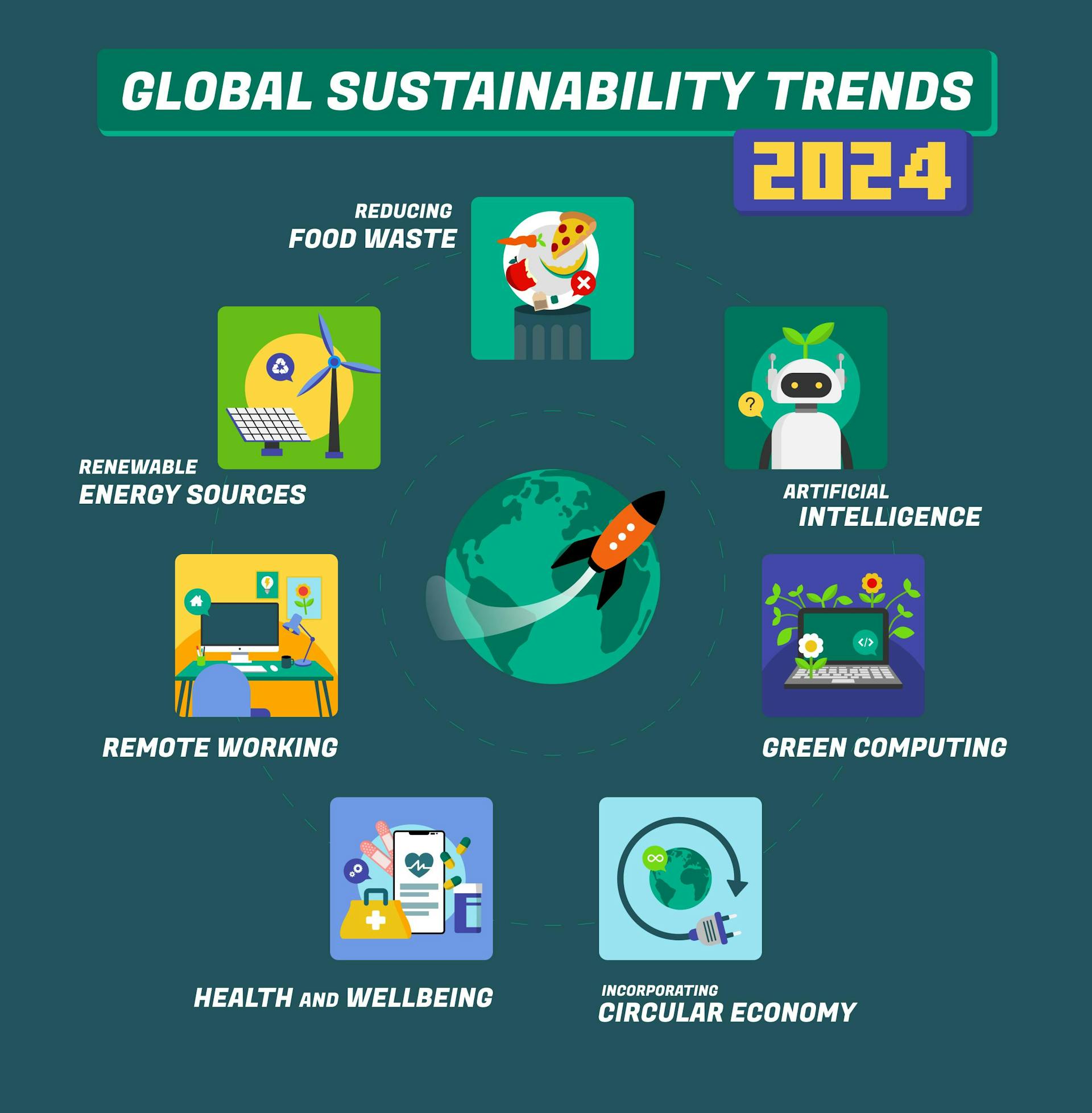 Top 10 Green Energy Shifts Fuelling A Cleaner World In 2026/27
The change in energy sources is the key industrial shift of our age, altering the nature of economies, infrastructure, geopolitics and daily life at a scale and speed that continues to stun even those that have been following it closely. Renewable energy has evolved from a dream to the most popular choice in terms of renewable power generation in the majority of the world and the momentum that has fueled this shift has been growing instead of slowing. The challenges that remain are relevant and important, but they're largely the burden to manage a change which is occurring rather than debating about whether it should. Here are the ten renewable energy trends powering the future in 2026/27.
1. Solar Power Continues Its Extraordinary Costs are DecliningSolar photovoltaic technology possesses an evolution path that has resulted in the lowest cost source of electricity ever recorded in the majority of markets. Prices remain in decline. Each time, doubling the installed capacity has yielded predictable cost decreases that have defied more conservative projections. Utility-scale solar is now the top choice for new generation capacity across the globe and the list of projects currently under development dwarfs anything that was before. The difficulty has moved from finding a solar system that is cheap enough to construct to managing grid integration implications of installing it at the scale the economics have now justified.
2. Offshore Wind Scales Up a LotOffshore wind has advanced from a niche technology that is expensive into a mainstream power source capable of producing at the scale needed to provide a significant contribution to grids across the nation. Turbines are expanding and more effective in their installation, and costs are falling as the field gains experience and supply chains develop. Floating offshore wind, which can be utilised in deeper water when fixed foundations simply aren't feasible, is moving from demonstration projects toward commercial scale and opening up vast new areas of potential that fixed-bottom technology has not access to. Countries with substantial offshore wind sources are investing heavily in ports, vessels and grid infrastructure required for the extraction of these resources.
3. Grid-Scale Energy Storage Becomes The Critical BottleneckThe intermittent nature of solar as well as wind power, which produce electricity only when it is sunny and wind blows, makes energy storage the critical enabling technology for the transition to renewable energy. Battery storage on grid scale is growing faster than most projections had predicted and is driven by rapidly falling cost of lithium-ion and the urgent need for flexibility in grids that have high renewable penetration. Beyond lithium ion there is a range of storage technologies with longer durations, including flow batteries or compressed air, gravity-based systems, and thermal storage are trending towards commercial deployment to address the gap in storage for seasonal and long-term periods that batteries alone cannot fill efficiently.
4. Green Hydrogen Finds Its Niche ApplicationsThe enthusiasm surrounding green hydrogen as a clean energy universal solution has been replaced by an accurate assessment of whether it really makes sense. The process of electrolyzing water to produce hydrogen using renewable electricity can be energy-intensive and will only work in specific applications where direct electrification is not practical. Heavy industry, which includes cement and steel manufacturing, shipping long distances and, possibly, aviation are industries in which green-hydrogen has the most convincing case. Electrolysis capacity investments, hydrogen transport infrastructures, and industrial offtake agreements are increasing in these areas with a realistic view of timeframes and costs that earlier estimates sometimes did not have.
5. Transmission Infrastructure Becomes A Defining ChallengeGrowing renewable generation capacity is no longer a main constraint on the energy transition in a variety of markets. Generating electricity from where it's generated, often in areas that are chosen based on the solar or wind power instead of proximity to demands, to where it's required, is now the primary bottleneck. Modernization and expansion of the transmission grid has become one of the major infrastructure concerns in Europe, North America, and further. Planning, permitting, as well as the community acceptance concerns associated with new transmission lines are usually more difficult to navigate than engineering issues, and tackling them is drawing large attention from policymakers.
6. Nuclear Power Experiences A Significant ReassessmentNuclear energy is under some significant changes in the nations which have been deviating from it. The combination of energy security concerns, decarbonisation targets, and the recognition that a grid powered by significant amounts of variable renewables requires significant renewable generation that is easily dispatchable and low carbon has brought nuclear back into serious discussion about policy. Modular reactors of smaller size, which promise lower upfront capital expenditures along with advantages for factory production and more flexibility for deployment in comparison to traditional nuclear plants are undergoing regulatory approval processes and beginning to gain the attention of investors. The question is whether they will be able to deliver on their promises on the scale and timeline required remains to be demonstrated.
7. Rooftop Solar And Distributed Energy Can Rewrite The GridThe rising popularity of rooftop solar and home battery storage, smart appliances, electric vehicle charging, and electronic control systems are creating the concept of a distributed energy system that differs from the centralised generation model and passive consumption that electricity grids were built around. Households, consumers, and businesses that consume and generate electricity are an important element of many grids. The management of two-way flows, local voltage management challenges and the aggregation of distributed sources into grid services requires new markets as well as regulatory frameworks and grid management methods that utilities and regulators are working on.
8. Corporate Renewable Energy Procurement Drives New InvestmentLarge corporations have become the main force behind developing renewable energy sources through longer-term power purchase arrangements that give developers the confidence they need to finance projects. Tech companies with a huge power consumption driven by data center growth are among the top active buyers of renewable energy for corporations, but the practice is spreading across different sectors. Corporate procurement is not just creating new capacity, but also determining the areas where it is constructed that is speeding up development in areas and markets that would otherwise be unable to take advantage of policy-driven investment. The reliability for corporate renewable commitments is being scrutinized more and more, setting higher standards for what is truly renewable procurement.
9. Energy Efficiency Gets a Refreshing FocusThe most economical unit of energy is the one that does not require to be generated, and the efficiency of energy is gaining attention as a critical complement to the deployment of renewable energy. Building retrofits that greatly reduce temperature and cooling demands, efficiency in industrial processes, electric appliances and motors and urban planning that decreases the demand for energy in transport are all getting government support and funding at a higher scale. Heating pumps, which collect heat from the earth or air rather than producing it through burning fossil fuel, have become a particularly important efficiency technology. They replace gas boilers in the buildings of Europe and beyond with technology that provides three to four units of heat for each unit of electricity used.
10. Energy Access Expands With Decentralised RenewablesIn the case of the seven hundred million people who cannot access electricity, the most effective solution usually is not more waiting around for grid extension by deploying decentralised renewables mostly solar, for household or communal level. Solar mini-grids and home systems have provided electricity access for the first times to communities across sub-Saharan Africa, South Asia, and Southeast Asia at a pace and at a cost that centralised grid extension cannot compete with in remote regions. The positive benefit of reliable electricity access on healthcare, education economic activity, and quality of life are profound, and renewable technology is delivering it to communities who would otherwise be waiting decades for the grid to access them.
The renewable energy transition is among the most significant changes that has occurred in the history of industrialization in humankind, and these trends indicate the shift that is driven by economics and momentum in the same way as ambitions for policy. There are many challenges that remain however they are becoming more clearly defined. In order to solve them, a knockout post we need to commit time and effort, political will, and the type of problem-solving system that the energy industry, at its peak, is capable of. It's time to set the direction. The next stage is the implementation. For more insight, explore the most trusted australiacurrent.net/ and get expert analysis.
 Report this wiki page